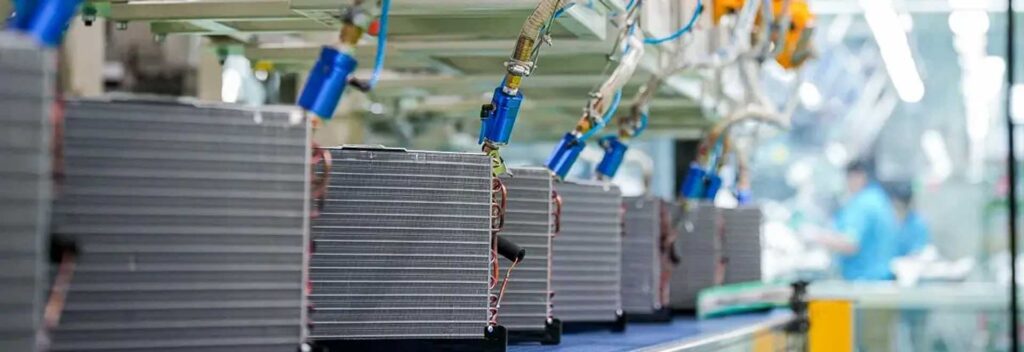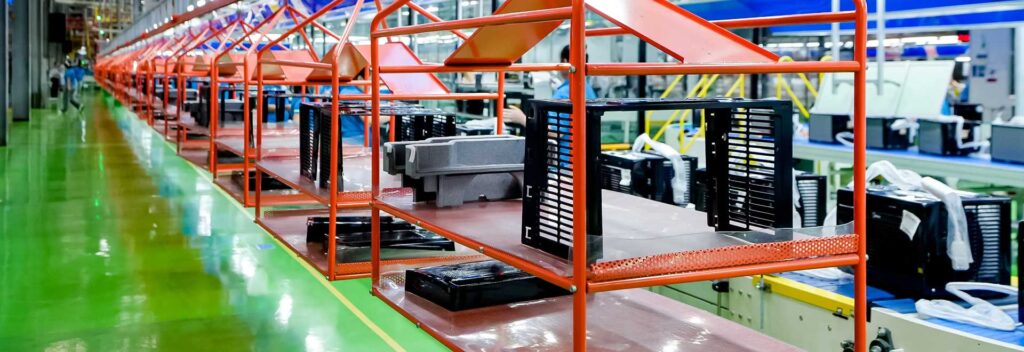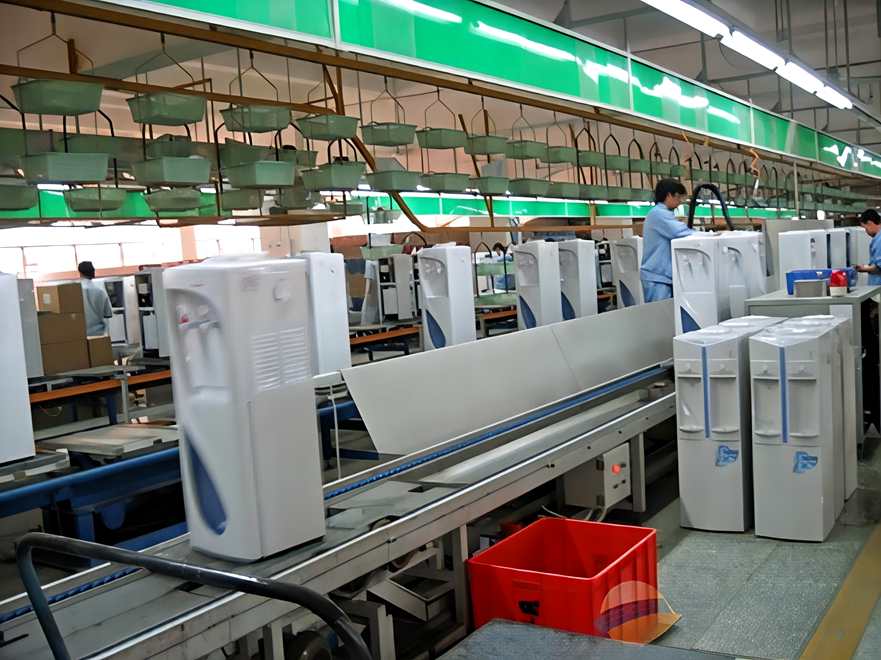
This is a high-efficiency automated assembly production line developed for mass production of hot and cold water dispensers. To tackle production challenges including bulky sheet metal enclosures, oversized plastic side panels and intricate internal pipeline structures, this production system adopts a hybrid conveying structure combining an overhead dual-speed chain conveyor and floor-mounted pallet conveying line. This original two-tier layout scheme not only fully utilizes the vertical space of the workshop but also enables smooth transportation of large complete machines while preventing scratches on equipment surfaces.
1. Conveying System & Overall Layout
The entire production line takes the overhead accumulating conveyor line as its core main line, which transports the metal main housings and plastic casings of water dispensers. It avoids congestion on workshop floor passages and prevents bumps, collisions and scratches on dispenser bases during transportation.
Beneath the suspended track lies a lower-tier dual-speed chain conveyor line, with dedicated assembly workstations arranged along its route. A distinctive feature of this production line is that side-hung material bins are installed above each workstation to hold small spare parts such as water taps, adhesive labels and screws. Components are readily accessible in an ergonomic manner, which optimizes assembly tact time and keeps workbenches tidy and clutter-free at all times.
2. Core Assembly Process Flow
The process sequence is tailored to the assembly requirements of precision mechanical components and refrigeration accessories of water dispensers, proceeding in the following order:
- Casing & Panel Assembly: Secure large plastic side panels and rear covers to the stamped steel frame, precisely calibrate door clearances to ensure tight assembly fit.
- Water Circuit System Assembly: Install the built-in water storage tank, drain valve and copper tubing for the heating chamber, then connect the external water inlet hose.
- Refrigeration Module Installation: Mount the complete assembly consisting of compressor, condensing coil and cooling fan, fitted with shock-absorbing fixing brackets to mitigate operational vibration.
- Complete Machine Performance Testing: Conduct comprehensive water leakage tests on the water circuit and pressure tests for refrigeration pipelines; meanwhile verify the touch sensitivity of the control panel and physical keys.
- Finished Product Packaging: Affix safety certification marks and energy efficiency labels, then pack the whole unit into corrugated cartons for shipment.
3. Quality Control & Inspection System
An automatic pass/fail inspection workstation is set up midway along the production line. Once the system detects faults such as internal water leakage, abnormal compressor noise and vibration, or malfunctioning heating indicator lights, the Programmable Logic Controller (PLC) will immediately trigger audible and visual alarms and divert defective products to the rework area.
The production line focuses on verifying the pressure-bearing capacity of water dispensers to withstand water pressure fluctuations and eliminate the risk of pipeline rupture. All performance indicators of finished units comply with international safety standards.
4. Main Technical Parameters
- Applicable Product: Vertical hot & cold water dispenser
- Conveyor Speed: Variable frequency adjustable, 6 ~ 12 m/min
- Conveying Mode: Integrated hybrid conveying system of overhead suspension + floor-mounted dual-speed chain
- Pneumatic Working Pressure: 0.6 ~ 0.7 MPa (compatible with pneumatic pressing and leak testing equipment)
- Load Capacity per Workstation/Pallet: ≥ 20 kg
5. Design Advantages
Benefiting from the suspended conveying structure, this water dispenser assembly line completely eliminates abrasion and scratching on the bases of large plastic casings. Equipped with ergonomic side-hung material bins for convenient access to small assembly parts, it greatly reduces the assembly cycle time per unit and maintains a neat, orderly workshop working environment in the long run.
Download PDF PDF / 127 KB