air conditioner assembly line
This is a practical, high-throughput air conditioner assembly line specifically designed for the final assembly of split[…]
Email:[email protected]
We are a home appliance assembly line manufacturer.
Tel:+86-13858631358 Mail:[email protected]
This is a practical, high-throughput air conditioner assembly line specifically designed for the final assembly of split[…]
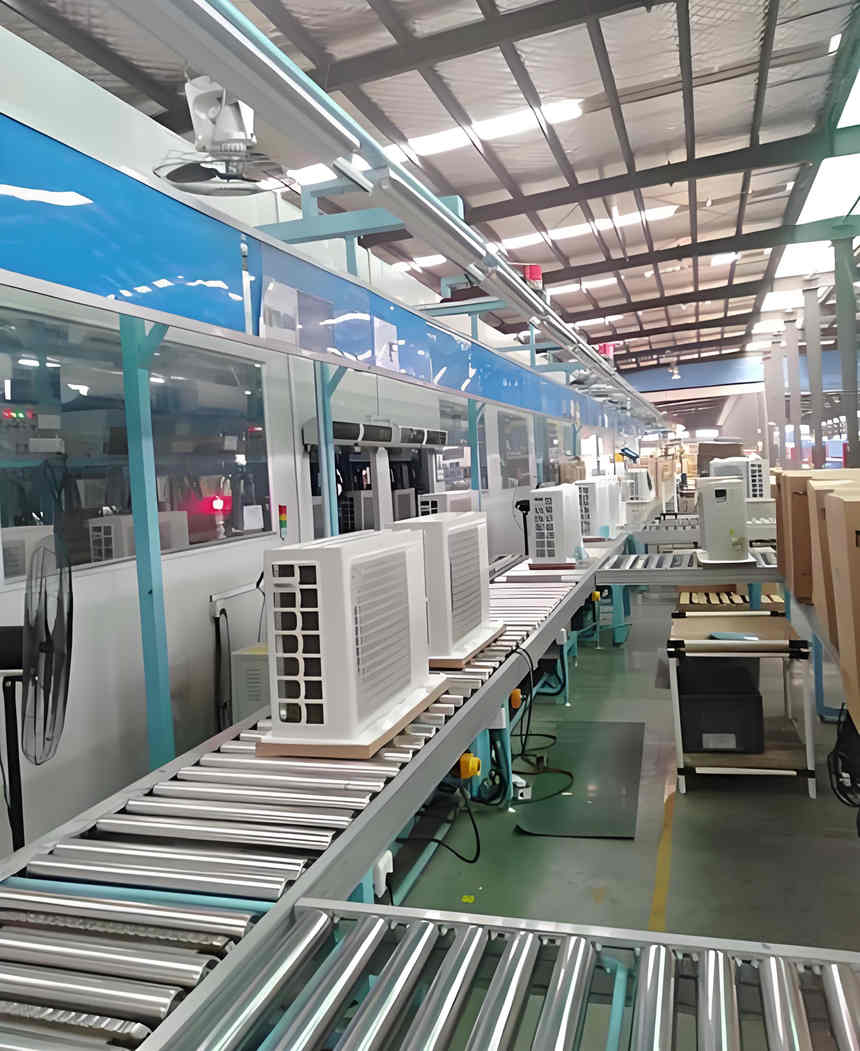
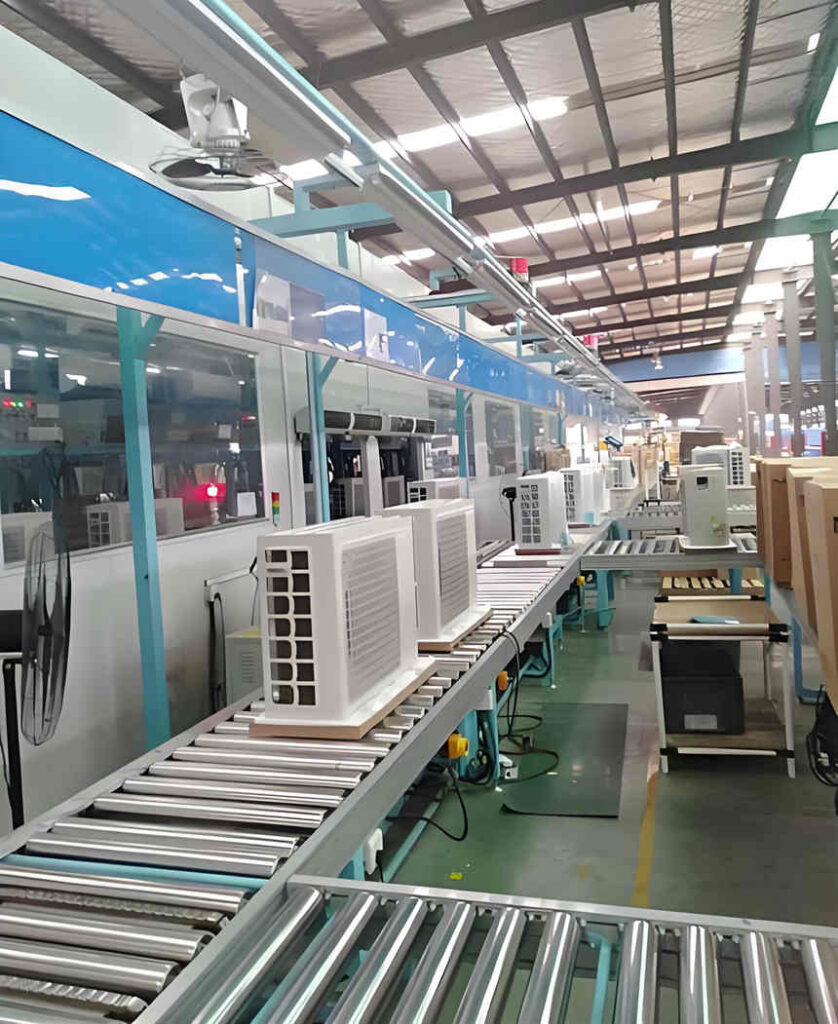
This is a practical, high-throughput air conditioner assembly line specifically designed for the final assembly of split-type air conditioner outdoor units. Unlike generic or overly conceptual designs, this line features a robust, inclined roller conveyor system combined with enclosed testing booths to maximize space utilization and operational efficiency on the factory floor.
I. Conveyor System & Physical Layout
The backbone of this AC manufacturing line is a heavy-duty, slope-style roller conveyor that transports units from raw assembly through testing to final packing. The conveyor uses galvanized steel rollers with a pitch designed to accommodate the footprint of standard outdoor units, allowing for smooth elevation changes without jolting sensitive components like compressors or heat exchangers.
On the left side of the line, you can see the blue-framed, transparent testing enclosures. These are strategically placed mid-line to isolate high-voltage electrical testing and refrigerant charging processes, ensuring operator safety while maintaining visibility. The layout is linear and straightforward, minimizing unnecessary movement of materials and allowing workers to stand in fixed positions for ergonomic efficiency.
II. Core Assembly & Testing Workflow
The assembly sequence follows a logical progression tailored to the specific demands of AC outdoor units:
III. Control & Quality Assurance
The line utilizes a simple yet effective PLC-based control system. Status lights on each station indicate operational status, and barcode scanners track each unit’s progress through the line. The transparent partitions aren’t just for safety; they also allow supervisors to visually audit the process without interrupting the workflow. If a unit fails a test, the conveyor automatically diverts it to a rework lane, preventing defective products from reaching the customer.
IV. Technical Specifications
V. Why This Design Works
This isn’t a flashy, over-engineered line; it’s a workhorse built for reliability. The use of roller conveyors instead of belt systems makes it durable enough to handle the heavy weight of outdoor units. The integration of testing directly into the assembly flow reduces handling and improves throughput. It’s a scalable solution that can be expanded with additional stations as production volumes grow.
Download PDF PDF / 152 KB
Previous: Washing Machine Assembly Line
Next: Laptop Assembly Line