
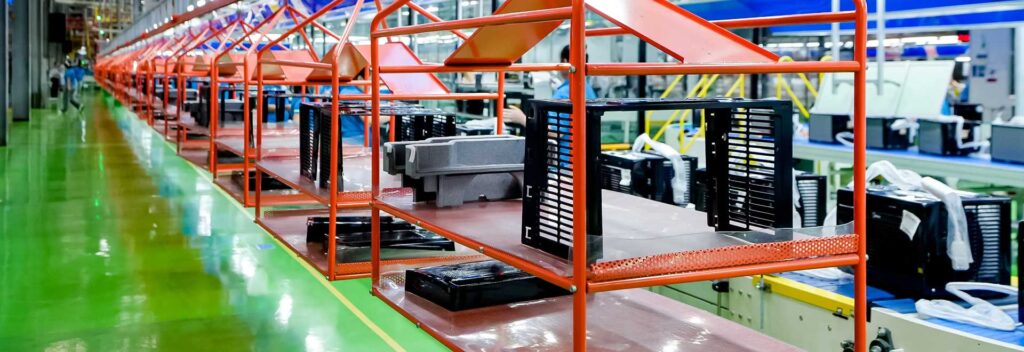
We are a home appliance assembly line manufacturer.
Tel:+86-13858631358 Mail:[email protected]
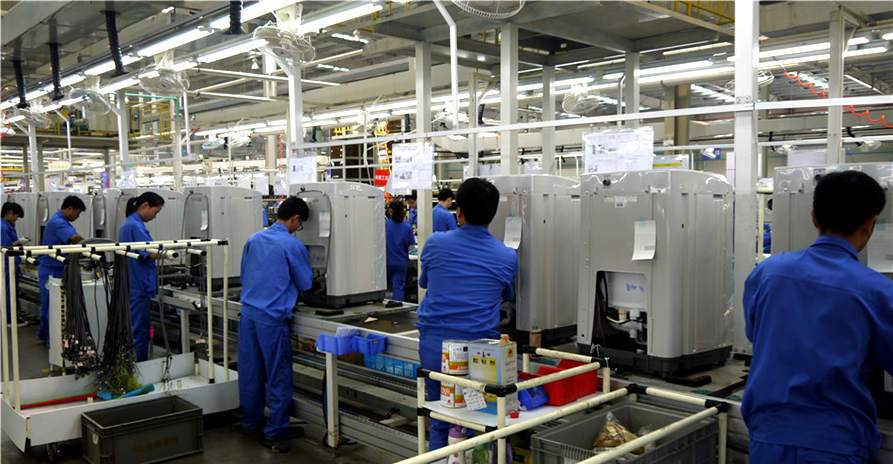
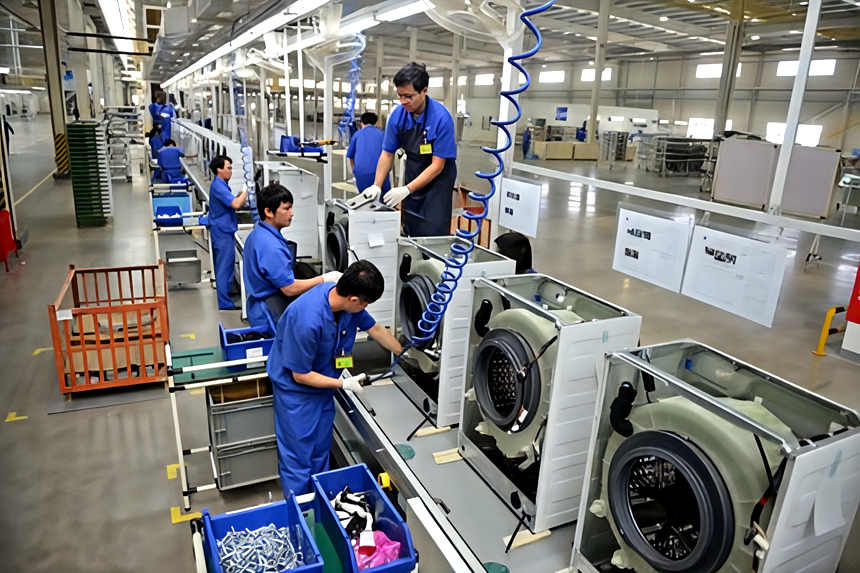
There are some things equipment vendors will never put in a proposal.
Not because they don’t know—but because saying them out loud is basically admitting: “The line you buy from me won’t actually run at its rated capacity.” But as an engineer who has commissioned dozens of washing machine assembly lines on the shop floor, I have to break the silence. The reason your washing machine drum assembly line never hits its design cycle time isn’t your workers, and it isn’t your management. It’s because these four pitfalls were buried in the line from day one.
Every single one of these is a hole I’ve stepped in myself. If an overseas buyer reads this and thinks, “This person has actually done this work—they’re not a shell company,” then this article has done its job.
The Symptom:
On a washer final assembly line, pallets (carriers) must repeatedly engage with locating pins or pneumatic stoppers for precise positioning. But after about three months of operation, you’ll find a ring of grime built up around the locating holes on the bottom of each pallet. Not ordinary dust—it’s a sticky “sludge” of detergent powder, packaging debris, and grease from the line.
The Consequence:
The locating pin doesn’t fully engage. The pallet stops 3–5 mm off target every time. For stations like door seal installation or control panel screw-driving—which demand precise alignment—that 3 mm means the operator has to manually nudge the pallet into place. Two extra seconds per station across a 20-station washing machine assembly line adds up to 40 seconds. Your design cycle time is 60 seconds; the reality just jumped to 100.
Why Nobody Talks About It:
The equipment vendor will tell you, “Your 5S housekeeping isn’t good enough,” and you can’t argue. But the truth is: most washing machine assembly lines are designed without any automatic brush or air-blow station for pallet bottoms, offloading all maintenance responsibility onto the customer.
The Fix:
The Symptom:
The pneumatic stopper cylinders on the line are supposed to stop pallets precisely in front of each station. But over time, you’ll notice the cylinder response time creeping from the designed 0.3 seconds to 0.8 seconds—or worse.
The Consequence:
The pallet isn’t stopped in time and bumps into the one ahead—or, more commonly, the previous station just released, but the cylinder hasn’t fully retracted, so the next pallet gets blocked. The result: a “phantom stoppage” between two stations. The operator thinks the upstream station hasn’t moved, when in reality the cylinder is just “daydreaming.” On a washing machine drum assembly line, these phantom stops can eat 30–40 minutes of net output per day.
Why Nobody Talks About It:
In 99% of cases, the slow response is caused by undersized or overlong air tubing, or an FRL unit (Filter-Regulator-Lubricator) that hasn’t been drained in months, causing unstable air pressure. These are installation details vendors won’t write into proposals and won’t proactively optimize during commissioning—because “functional” and “optimized” are separated by half a day of air-line tuning.
The Fix:
The Symptom:
A new line launches. The IE engineer times each station at its “best operator, best conditions” speed, calculates that the entire washing machine assembly line can run at a 55-second cycle. So the line speed is set to 55 seconds on day one. Result: 12 line stops per day in week one, averaging 4 minutes each.
The Consequence:
Unskilled operators facing a rigid 55-second cycle will instinctively cut corners—skipping screws, loosely fastening zip ties, stuffing wire harnesses without securing them. What you get isn’t output; it’s mass rework. The cruel irony: by the time operators are fully trained (usually 3–4 weeks later), the line could actually run at 50 seconds. But by then, quality issues have already triggered customer complaints.
Why Nobody Talks About It:
Equipment vendors are incentivized to push the cycle time as fast as possible—because “hitting design cycle time” is their acceptance criterion. What happens after—how much rework you face, how angry your customers get—isn’t in their contract.
The Fix:
The Symptom:
The final section of washer assembly is safety and functional testing (water inlet, drain, spin vibration, heating, etc.). This station typically has an equipment failure rate of 8%–15%—pneumatic fixtures misgrip, sensors false-trigger, flow meters drift. Every failure stops the entire washing machine drum assembly line.
The Consequence:
When the test station goes down, every upstream station fills up within 3–5 minutes. After repair, it takes 10–15 minutes to clear the backlog before rhythm is restored. If the test station fails 4 times a day, you’ve gifted away one full hour of capacity. For a factory producing 300,000 units/year, that one hour equals 65 fewer units per day—roughly 15,000 units of lost output per year.
Why Nobody Talks About It:
Test equipment is usually subcontracted to a third party, while the line builder is only responsible for “delivering the pallet to the test position.” Neither party wants to pay for a few extra meters of roller conveyor to add a buffer. In the end, you pay with your capacity.
The Fix:
Any one of these four pitfalls alone can push a washing machine assembly line’s actual cycle time 10%–15% off its design value. If all four hit at once—congratulations: your 60-second design cycle is now running at 80 seconds. That’s a 20% capacity haircut from day one.
These aren’t “theoretical problems.” They happen on every machine, at every station, every single day. The reason overseas buyers are willing to pay a 15%–20% premium for a supplier who understands these pitfalls isn’t because they have money to burn—it’s because they know a vendor who has stepped in these holes will deliver a line that actually runs at its rated capacity.
Download PDF PDF / 257 KB
Previous: